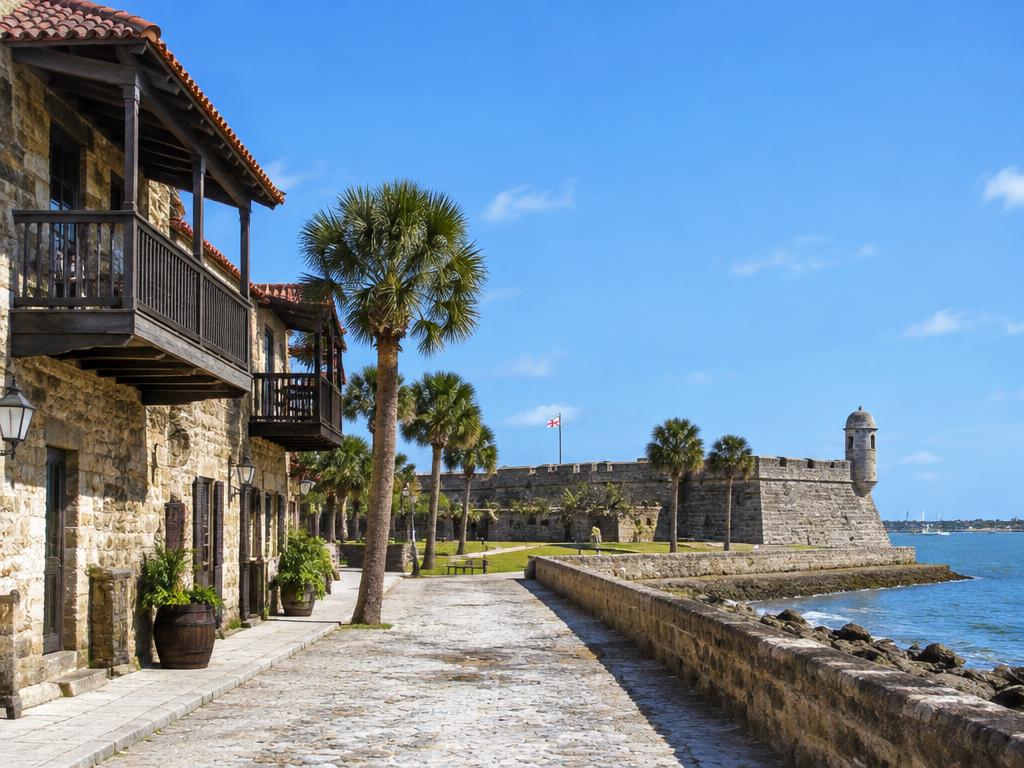
St. Augustine, Florida
Founded in 1565, St. Augustine is the oldest continuously inhabited European-founded city in the contiguous United States. A compact historic core and nearby beaches make it appealing; lodging style and seasonality vary a lot.
- Eastern Time
- car often helpful
- Southeast
- historic
- coastal
Confirmed facts
Documented by the sources listed below. Last reviewed 2026-10-17.
- Founded in 1565 by Spanish settlers.
- Home to the Castillo de San Marcos National Monument (NPS).
- Observes Eastern Time (with daylight saving time).
- Within the Atlantic hurricane season zone (June 1 – November 30).
Planning considerations
Our analysis — qualified, not guarantees.
Historic core vs. beach
The historic district and the beaches are distinct areas. Choose based on whether you want walkable dinners or ocean mornings.
Smaller lodging footprint
Inns and small properties may not offer extended-stay amenities. Confirm kitchen and laundry access before booking.
Seasonal demand
Rates and crowds can shift with seasons and holidays. Compare several date ranges.
Itinerary ideas
Suggestions only — not tested or confirmed. Check hours, conditions and access before going.
- Early-evening walk past the Castillo after work.
- A beach morning on a light meeting day.
Still researching
- Transit coverage for car-free stays.
- Extended-stay properties with verified desks.
St. Augustine planning guides

Planning
Best Places to Work Remotely in the USA for a Month: How to Choose (Not a Ranking)
A transparent framework for picking a US city for a month of remote work — time zone, internet evidence, lodging type, car needs and weather — applied to five cities we cover.
9 min read

Getting Around
Workation Destinations Without a Rental Car: An Evaluation Method
A repeatable way to judge whether a city works car-free for a remote-work stay: the daily-errand radius, transit test and airport transfer check.
7 min read